Relic point Vietnam
Việt Nam
Cau Khoai Temple
When talking about Yen The, people talk about the image of Hoang Hoa Tham - the cloth-shirted hero who led the longest Yen The peasant uprising among the uprisings against French colonial rule, lasting a long time. nearly 30 years (1884-1913), was a typical uprising for our nation's patriotic movement before the Party led it. The image of brown-shirted hero Hoang Hoa Tham and traces of the uprising are always imprinted on architectural works including communal houses, temples, pagodas, and strongholds. Among them is Cau Khoai Temple, a special national relic site in Tam Hiep commune, Yen The district. Cau Khoai temple relic is located about 30km from Bac Giang city, about 2km northwest of Cau Go town center. Cau Khoai Temple Relics, also known as Co Temple, is a way to commemorate the merits of two girls worshiped in the temple: Dam Thi Dung Hoa born in 1507 and Dam Thi Que Hoa born in 1510, the children of a mandarin. Great Dam Than Huy during the Le-Mac dynasty. He had many great contributions to the people and the country, and was recorded in history books in fighting against the Mac Dynasty. When Dam Than Huy died, his two sons, Dam Dung Hoa and Dam Que Hoa, continued to lead the army against the enemy for 3 more days. When they reached Dien village, Tam Tien commune, knowing they could no longer fight, the two girls committed suicide into the Soi river to preserve their reputation. To commemorate the merits of the two women, local people built a temple to worship them. Later, local people built another pagoda behind the temple called Hoai Am pagoda to pray for gratitude and preserve the fragrance of the two daughters of the Dam family who sacrificed in this land. Cau Khoai Temple is one of many bases of the insurgent army, a place that marks many historical events associated with the Yen The uprising led by Hoang Hoa Tham. The relic complex is still located on land managed by the Yen The insurgent army, surrounding the temple area is a system of fortresses. Here, the Yen The insurgent army and the French colonialists were often in a fierce standoff, the insurgent army destroyed many enemy forces. The entire Tam Hiep region is the area of strong activity of the Yen The insurgent army commanded by Hoang Hoa Tham and his generals such as Ca Trong, Ca Dinh, Ca Huynh... Many battles in this land has been recorded in history books such as the battles of Don Hon, Trai Tre, Don Hom, Fort Hang So... The land and people here provided food, food and human resources for the base of Hom, contributing significantly to the war. repelling the large-scale attack of the French colonialists on Yen The on May 23, 1892. Cau Khoai Temple was built in 1524 and has been restored and renovated through many stages. The current relic complex includes construction items: Temple gate, campus, main temple area and Hoai Am pagoda. All are located in a large, beautiful land overlooking Highway 17, on the other side is the Hom station base of the Yen The insurgent army. The temple currently has a nail-shaped architecture, including a front altar and a harem. In the harem, there are statues of the two ladies and their attendants. Behind the temple is Hoai Am Pagoda built by local people with the meaning of praying for the grace of salvation for the souls of the two daughters of the Dam family. To commemorate the gratitude of the two daughters of the Dam family, on January 23 every year, the Party Committee, People's Committee of Tam Hiep commune and local people jubilantly organize a festival to commemorate and review historical traditions. glorious history, great contributions of Dam Than Huy and his two daughters; Honoring heroic examples and sacrifices in the nation's resistance war against foreign invaders. The festival is organized in 2 parts including the Incense Offering Ceremony and the Festival part which is organized with many cultural activities, sports, folk games imbued with national cultural identity such as blindfolded goat catching, pot smashing. , tug of war, mass cultural performances, shuttlecock throwing, cockfighting, Chinese chess, football... show the martial spirit and desire for freedom of the local people. Cau Khoai Temple relics not only have historical significance and value, the Temple is also a place for religious activities of the people, and is an attraction for a large number of tourists from all over the province to visit and study. rescue. With the historical significance and value of the monument, on May 10, 2012, the Prime Minister signed Decision No. 548/QD-TTg on the classification of special national relics for the "Historic Monuments" Yen The uprising site"; of which Cau Khoai Temple, Tam Hiep commune, is one of 23 special national relic sites./. SOURCE: BAC GIANG DEPARTMENT OF CULTURE, SPORTS AND TOURISM CENTER FOR INFORMATION - TOURISM PROMOTION
Bac Ninh
2868 view
Rating : National monument

Tien Luc Relics Cluster
Coming to Bac Giang, visitors will be able to visit, learn about the historical and artistic values of ancient pagodas, explore and experience the amazing natural landscapes that nature bestows on Bac Giang and the Cluster. Tien Luc relic is one of the ideal stops for tourists from near and far. Located about 20km northeast of Bac Giang city in Tien Luc commune, Lang Giang district, Bac Giang province. The Tien Luc relic cluster includes a complex of relics located in the airy, poetic space of a midland region full of life. Tien Luc relic cluster includes: thousand-year-old Da Huong tree, Vien Son communal house, Phuc Quang Pagoda, Thuan Hoa communal house... Tien Luc relic cluster has been recognized by the State as a national historical relic and has become a national historical relic. become an attractive destination for domestic and foreign tourists. The first destination is the thousand year old Da Huong Tree. According to scientists, this tree was conferred by King Le Canh Hung as "National Lord Da Dai Vuong" family (including wild rose tree, Vien Son communal house, Phuc Quang pagoda, Thuan Hoa communal house...). According to estimates, the tree's stump is as big as eight people, and according to researchers, the largest point of the trunk is 11m, the smallest is 8.3m, the tree is about 36m high, with a diameter of over 2.5m. The average bark layer is 15cm thick. The spreading canopy of wild rose trees covers the roof of Tien Luc communal house, creating a unique landscape for a countryside rich in cultural relics. Wildflowers usually bloom in late spring and early summer, are pale yellow, have tiny petals and have a scent like hyacinths Trees are not only the beauty of the environmental landscape, the natural landscape, but also the cultural beauty, a very rustic, intimate, and sacred symbol in the Vietnamese cultural space. According to the people here, each broken tree branch represents an event signaling a major change in the country, such as: In 1945, the large wild hyacinth branch in the northeast broke when the August Revolution succeeded; In 1954, the broken western branch was the year of Dien Bien Phu victory; In 1964, the southern branch was broken in association with the Gulf of Tonkin event and the war expanded to the North; In 1975, the western branch broke, associated with the liberation of the South and reunification of the country; In 2006, a scene at the southern peak broke, that year our country joined the World Trade Organization (WTO). The next destination is Phuc Quang Pagoda or people still call it Phuc Quang Tu - an ancient pagoda nearly 300 years old, located right next to Thuan Hoa communal house and the People's Committee headquarters of Tien Luc commune, Lang Giang district, on the side of provincial road DT295 is considered a sacred place of worship, with unique architecture and associated with the most mysterious stories. The stele here says that the pagoda was founded in the spring of the third year of Long Duc (March 20, 1734) under the reign of King Le Thuan Tong, next to an older pagoda by monk Chieu Chiem calling on the people to join forces. build. Nearly 300 years old, the pagoda still retains the large bell from the first day and about 90 precious Buddhist statues. However, the wood and stone sculptures are almost gone. During the war years, although the surrounding communes were bombed until they were damaged, Phuc Quang pagoda and Tien Luc commune were still protected. safe. Local people are therefore more convinced that it is the ancient temple that guards this land, helping them settle down. According to ancient legend, there was a king wearing plain clothes and accidentally passed by Phuc Quang pagoda. Because of his previous enmity with Buddhism, this king left behind a curse: any monks cannot stay in this temple. The people thought it was just a blurted statement from the king, so they didn't pay attention. Until later, a Zen master was assigned to take care of the temple, but as soon as he reached the Three Jewels, he was bitten by a snake and was too afraid to leave the temple. The next monks who came to the temple only stayed for a while and then had to leave. Only then did the people remember the strange king and began to spread the story of the divine snake fulfilling the curse to hinder the monks. Most recently, monk Hue Cuu became the abbot in 2010. However, less than 3 years have passed. Later, the monk called a car in the middle of the night, packed his luggage and left without saying goodbye. Only in the morning did the people in the village find out. After that, no one heard anything about monk Hue Cuu anymore. Next, a few other monks visited the pagoda and also wanted to stay, but after lighting incense and praying and looking at the incense stick with the words Confucian inscription, they all quietly left, never to return... Phuc Quang Pagoda recently Most of the buildings have been restored, generally still bearing the appearance of the architectural art of the Nguyen Dynasty. The pagoda is located on a low mound, facing south, overlooking a large brick yard with perennial longan trees, and beyond is an ancient garden. On the right front of the street is a row of 3-compartment, 2-seat Giai Vu houses, on the left is the back of the newly renovated village communal house. The pagoda was built with the layout in the shape of "internal Cong foreign national". The front hall is 7 wide with doors and tables, and on both sides of the incense burner are a pair of quite large statues of the Dharma Protectors. The upper hall is full of Northern Tong statues, the light is mainly from two side doors connecting to two corridors where the Arhat and Vajra Buddha statues are placed. All statues have been newly painted. At the end of the two corridors connecting the back hall, made in the style of two match floors, there is a steep staircase to get to the bell tower. Finally, located in the Tien Luc relic cluster is Thuan Hoa Communal House: Thuan Hoa Communal House is also known to people in the area as Cay Bang Communal House. The communal house is located on a large and flat area of land, next to the communal house is an ancient almond tree that shines all year round, in front of the communal house is road 295 from Voi to Tien Luc, the communal house is about more than 100m from the pine hill. Thuan Hoa communal house was built around the 18th century, worshiping two village tutelary gods, Cao Son and Quy Minh. The communal house has a nail-shaped architecture with 5 main halls and 3 back palaces. SOURCE: BAC GIANG DEPARTMENT OF CULTURE, SPORTS AND TOURISM CENTER FOR INFORMATION - TOURISM PROMOTION
Bac Ninh
2874 view
Rating : National monument

Do Xa Communal House
Do Xa communal house, Ung Hoe commune, Ninh Giang district, Hai Duong province is ranked as a national architectural-artistic relic according to Decision No. 05/1999 Decision/Culture and Sports, January 24, 1999. Do Xa Communal House has the literal name: Do Xa Communal House, traditional name: Do Xa Communal House, common name: Do Xa Communal House. The communal house is located on a high, flat land in the center of Do Xa village. Do Xa village in ancient times was Trang Do Xa, during the Le dynasty it was Do Xa commune, Dong Cao district, Vinh Lai district, Ha Hong district, Hai Duong town, during the Nguyen dynasty it was Do Xa commune, Do Xa district, Vinh Lai district, Ninh Giang district. , Hai Duong province. From the day it was built, Do Xa communal house has been named after Do Xa village. Going back in history, based on the name of Do Xa village and the genealogy of some families, it is known that the origins of the residents of Do Xa village are two large families, the Do family and the Nguyen family. Currently, these two families make up the majority of the village's population. Based on legends among local people and Han and Nom documents, especially the divinity currently preserved at the Communal House, it shows that Do Xa Communal House was built to worship three brothers, Nguyen Ton, Nguyen Lau and Nguyen Lang. Supported King Le Loi in the uprising against the Ming invaders in the 15th century. The Ming invaders invaded our country, their crimes piled up as high as an unspeakable mountain. Our people could not bear the loss of their country and their homes and rose up to fight. In the Lam Son region (Ke Cham), now in Tho Xuan district, Thanh Hoa, there was a hero Le Loi who stood up to recruit soldiers and heroes, and trained insurgents to fight together to save the country. At that time in Thai Binh, there was a person named Nguyen Chuyen, his wife was Dao Thi Loi, the couple had been married for a long time but had no children. One night she dreamed that an old man gave her three peaches and then disappeared. She conceived to full term and gave birth to a bundle containing three sons. They happily named their three children Nguyen Ton, Nguyen Lau and Nguyen Lang. The three children grew up to be handsome and handsome. At the age of 7, they were proficient in history, highly skilled in martial arts, and talented. famous. At the age of 15, they soon discovered their literary and martial arts talents. In 1418, Le Loi started the Lam Son uprising, chose people to help the country, knowing that his father was talented, Le Loi appointed Nguyen Ton as the commander of the envoy and general, Nguyen Lau as the Ta Do general, and Nguyen Lang as the Huu. The Thai capital guarded the army general. The three men commanded 5,000 troops, weapons, food, flags, gongs, and drums. After one night, the insurgents marched to Do Xa site, Ha Hong district, Hai Duong district, now Do Xa village, Ung Hoe commune, Ninh Giang district, Hai Duong province, to set up a garrison to recruit troops. The battle was fierce, the enemy army was defeated. The uprising was successful, and his father wished to reward the soldiers. The country enjoys happiness, cultivates the fields, and the people are prosperous and prosperous. Suddenly one day, there was a storm with 3 clouds of purple, red, and pink colors covering the three gentlemen who passed away and did not return. That day was March 10th, which people called the day of transformation. Later on March 10, playing, singing, and using the colors purple, red, and pink are prohibited. Le Loi sent envoys to cut fields to build temples and conferred the titles of Superior deities: Nhat Phong Minh Ton Dai Vuong, Nhat Phong Khong Lau Dai Vuong, Nhat Phong Dai Vuong Tang Lang. Do Xa Communal House was built in the Later Le Dynasty on a quite large scale. To remember the merits of the three men, every year on November 11 (lunar calendar), people hold a 10-day sacrificial festival to commemorate their birth and death anniversary. During the festival, in addition to offerings, there are also Cheo singing, water puppetry, and clay cannon competitions. Do Xa Communal House is not only associated with the names of the three predecessors who made contributions in the resistance war against the Ming invaders in the 15th century but is also associated with many local historical events. During the resistance war against the French colonialists from 1946 to 1954, many secret trenches were dug in the royal palace. The main force of Ninh Giang district many times came to station and take refuge here. In 1946, the Communal House was the place where the people conducted the election of the 1st National Assembly, the first National Assembly of the Democratic Republic of Vietnam. From 1966 to 1969, from 1972 to 1973, the front altar of Do Xa Communal House was used as the hall of branch II - Nguyen Ai Quoc Central School. In 1967, comrade Le Duan, then First Secretary of the Communist Party of Vietnam, visited and talked with local people at Do Xa Communal House. From 1974 until now, the Do Xa Communal House's altar hall has been used as the commune's meeting hall and has witnessed many historical events of the people of Do Xa village in particular and the government of Ung Hoe commune in general. Promoting the traditions of their ancestors, the Party Committee and people of Ung Hoe commune have continuously strived to build an increasingly rich and beautiful homeland. Source Electronic information portal of Ninh Giang district, Hai Duong province.
Hai Phong
2832 view
Rating : National monument

Tuan Tranh Quan Lon Temple ( Tranh Temple )
Tranh Temple is located in Tranh Xuyen village, Dong Tam commune, Ninh Giang district, Hai Duong province with a total area of 29,417m2. Tranh Temple worships Mandarin Pentecostal Tranh, the 5th mandarin in the Five Gods of the Vietnamese people's belief in worshiping the Four Palaces. Currently, Tranh Temple relics are located on a spacious campus with 34 large and small rooms, including 7 pre-worship rooms, 7 intermediate rooms, 7 connecting house rooms, 3 Co-strip rooms, 3 harem rooms, 7 Dong vu rooms and many other auxiliary works such as the Dong Vu building consisting of 7 angled train compartments, made of ironwood, roofed with tiles; Nghi Mon was built in the style of "matching piles", including 2 side doors and one main door, on a large scale like the old Nghi Mon; beer house, radio station... Mr. Vu Dinh Tien, Deputy Director of the Department of Culture, Sports and Tourism of Hai Duong province, said that Tranh Temple in Dong Tam commune, Ninh Giang district was ranked as an Artistic Architectural relic by the Ministry of Culture, Sports and Tourism. country according to Decision No. 1214/Decision - Ministry of Culture, Sports and Tourism, dated March 25, 2009. Tranh Temple traditional festival was recognized by the Ministry of Culture, Sports and Tourism as a national intangible cultural heritage according to Decision No. 781/Decision - Ministry of Culture, Sports and Tourism dated April 4. April 2022. This is a valuable human resource that plays an important role in the cultural and spiritual life not only of the local community but also of the entire Vietnamese people, which further confirms the identification of potential. , the strength of the monument in contributing to the tourism development of Ninh Giang district in particular and Hai Duong province in general. Source: Ministry of Culture, Sports and Tourism.
Hai Phong
2929 view
Rating : National monument

Sung An Pagoda (prayer pagoda)
Sung An Pagoda in Dong Cao village, Dong Xuyen commune, Ninh Giang district (Hai Duong) was ranked as a national historical and cultural relic on March 15, 1974 for its architectural sculpture. This is also the earliest pagoda ranked as a national monument in the district. Previously, Sung An Pagoda welcomed monks and nuns back in March every year and was the ancestral place of the Truc Lam Zen sect in the East Sea. The relic is in Dong Cao village, Dong Xuyen commune, Ninh Giang district, Hai Duong province. The pagoda has been ranked as a national historical and cultural relic since March 15, 1974. History - the architecture of the pagoda dates back to the Ly dynasty and was restored in the Tran dynasty. The scale of the pagoda is quite large, the layout is in the domestic and foreign style. The roof is tiled with ancient hats. The pagoda worships Buddha and worships master Huyen Quang of the Truc Lam sect during the Tran dynasty. The pagoda's relics include a 1.7 m high stone tree built in Canh Tri 9 (1671), 6 stone crocodiles, 3 17th century stone stele, a system of 30 gilded wooden Buddha statues, skillful art, but In the past 10 years, 9 out of 30 ancient statues have been stolen by thieves. The front hall has a bell, cast in the year Gia Long 11 (1812), 90 cm high, 62.5 cm in diameter, the whole body covered with cards, very beautiful. In particular, the 2-storey hexagonal lotus stone pedestal is carved with a fire-crested dragon and a body with many folds. Sung An Pagoda has an area of nearly 5000 square meters. The pagoda's scale includes a main pagoda built in the Dinh style, a Mother Goddess cave, and an Ancestor church. During the two resistance wars against the French colonialists and the American imperialist invaders, Sung An Pagoda was the place to evacuate and raise traces of Viet Minh cadres. Every year on March 15 of the lunar calendar, people hold a festival. In recent years, village officials have donated over 1 billion VND and thousands of man-days to build walls, guest houses, pearl wells, and courtyards. Source Electronic information portal of Ninh Giang district, Hai Duong province.
Hai Phong
2939 view
Rating : National monument
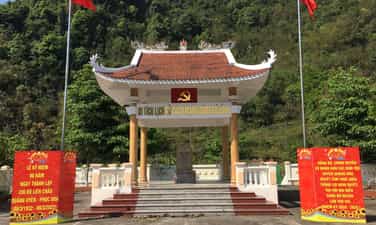
Historical Relics of Dong Bo Linh Revolution
Dong Bo Linh revolutionary historical relic On March 8, 1932, comrade Duong Cong Hoat, on behalf of the Cao Bang Provincial Party Executive Committee, introduced and admitted comrades to the Communist Party of Vietnam: 1. Comrades Ma Kien Kien (i.e. Ma Trung Lam) was born in 1914, Tay ethnicity 2. Comrade Ma Kien Moi (i.e. Hong Hai) was born in 1917, Tay ethnicity 3. Comrade Ma Kien Hoach (i.e. Hong Chi) was born in 1914 , Tay ethnic group 4. Comrade Ma Kien Tich (ie Hong Lac) was born in 1914, Tay ethnic group Coc Coc branch is the Lien Chau Quang Uyen - Phuc Hoa cell and is also the first Communist Party cell in the East Cao Bang province, officially recognized by the Cao Bang Provincial Party Committee; Comrade Ma Trung Lam was elected party cell secretary. The first task of the Coc Coc cell was to immediately carry out the tasks that the Long Chau Overseas Cell (China) and the Nam Lin cell were carrying out: Secretly transporting books, newspapers, documents, and transporting passengers. Soldiers engaged in revolutionary activities, studied between regions, actively developed the party, promoted the movement against taxes, against widowhood, abuse, against forcing husbands to work during the harvest season, and being a husbandman required money and rice. Dong Bo Linh revolutionary historical relic was built on March 7, 2012, completed on May 19, 2013. Decision No. 2917/Decision - People's Committee dated November 11, 2005 of the Provincial People's Committee recognized Dong Bo Linh as a revolutionary historical relic - the place where the first Communist Party cell of Pan-African was established. Quang Uyen - Phuc Hoa (now Quang Hoa district) on March 8, 1932. Source Electronic information portal of Quang Uyen district, Cao Bang province.
Cao Bang
5428 view
Rating : Provincial level relics
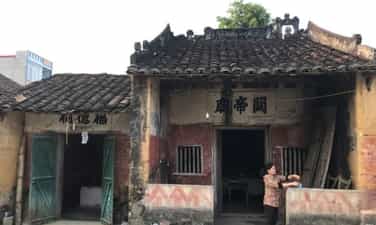
Quan De Temple
In Ngoc Dong commune (Quang Uyen), there is a Quan De temple that has been recognized as a provincial historical-cultural relic by the Provincial People's Committee. The temple has meaning and is associated with each ups and downs of historical periods in this land. Quan De Temple was built at the beginning of Dong Da market, Ngoc Dong commune to worship the figure Quan Van Truong, a general of the Three Kingdoms period (China). According to Vietnamese beliefs, worshiping Quan Cong is due to admiration and respect for his virtue. In Cao Bang today, there are many temples and shrines worshiping Quan Cong in districts: Bao Lac, Tra Linh, Trung Khanh... and Quan De temple in Ngoc Dong commune. According to the survey results of the Provincial Museum, the temple was probably built in the 36th year of Tu Duc's reign (ie 1882) based on the date recorded on the great letter in the temple and the decorative patterns of some remaining architectural pieces. left of the temple. Overall, the temple has a house with an area of over 40 m2, next to the temple there is a small room to worship the local people. The total area of the two rooms is over 57 m2, both are built in the style of a walled house. The main material that creates solid walls is fine red clay combined with lime and molasses, kneaded thoroughly to create a mixture with high adhesion, the wall layer is 30 to 35 cm thick. Tile roof system, wooden truss structure. The system of altars and statues in the temple includes: The outer altar is built of bricks, 73 cm high and 2.2 m long, used to hold incense bowls, candles and other offerings. The inner altar is 62 cm high, 1.8 m long, 1.4 m wide with 4 statues: The innermost statue is a 120 cm tall statue of Quan Cong wearing a yellow shirt, red dragonfly hat, long black beard, in sitting posture; The two statues of soldiers on both sides are 50 cm high, the statue on the right is wearing a light red shirt, holding a sword, the statue on the left is wearing a yellow shirt, holding a javelin, both statues are in a standing position; A 57 cm tall statue of Quan Cong's assistant wearing a blue shirt in a sitting position. The statues are all handcrafted from clay, plastered with cement, and covered with color on the outside. In the temple there are also many horizontal panels and couplets in Chinese characters. Outside the temple, there is a stone stele recording the kindness of the deity worshiped in the temple. Mr. La Van Quynh, who has lived for many generations adjacent to the west side of the temple, shared: Every year at the temple, there are holidays held throughout the year, such as: On February 2, there is a ceremony to worship the gods; Qingming Day; May 13 is the death anniversary of Quan Cong; August 2 celebrates the day of temple repair... to pray for good luck, happiness and peace for the people. On holidays, people in the area contribute money and rice to buy offerings to bring to the temple. To prepare for each holiday, people divide into groups and groups take turns preparing the ceremony tray, including: 1 pig, sticky rice, chicken, fruits, candies... The ceremony is conducted by the elderly. Only on the February 2nd holiday are priests invited to perform the ceremony. After the ceremony, everyone eats together and when they leave, there is a fortune distributed to the families. In addition to the main holidays of the year, on the first and full moon days of every month or when there is a big event at home, people in the area still come to burn incense and pray for peace and fortune. In April 2018, the temple was recognized by the Provincial People's Committee as a Provincial Historical-Cultural Monument. But due to a long period of time and the influence of many factors: weather, climate, people..., Quan De Temple can no longer maintain its original status. The relics in the monument, such as drums, bells... were lost in 1978, and the old statue system was demolished in 1979. On the other hand, because the temple foundation is 20 cm lower than the road surface, humidity leads to the wall system. , roof, rafters... are all in a degraded state so they are in dire need of repair. According to Ngoc Dong commune leaders, since the beginning of 2019, people in the temple area have voluntarily donated money and will carry out repairs, continuing to preserve, preserve and promote the value of the temple's historical and cultural relics. Guan Di is effective. Source: Cao Bang province electronic information portal
Cao Bang
5261 view
Rating : Provincial level relics
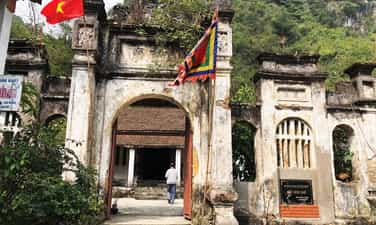
Bach Linh Temple.
Bach Linh Temple (local people also call Bach Linh Pagoda) is located in Old Street, Quang Uyen town (Quang Hoa). The shrine worships 100 of the most sacred things of many types of animals, the chief of which is the dragon - a divine animal with magical power, a symbol of mystical nobility that spits pearls and pearls, and is the head of the four sacred dragons. Ly, Quy, Phung. The dragon at the temple is deified to a supernatural level, along with precious things that become priceless spiritual values, beliefs, and aspirations of local people when they come to worship. Up to now, social and humanistic researchers have not yet determined when the temple was built. They only know that it appeared a long time ago and is deeply embedded in folk memory, associated with the Fireworks Festival. held at the beginning of spring every year. The current situation of Bach Linh Temple is quite similar to other temples, pagodas, and shrines in the province. It has gone through the historical ups and downs of the dynasties, so there have been changes and are no longer intact as before. Legend has it that the temple's architecture consists of 3 parts: three gates, front hall, and harem with the architectural appearance of the Nguyen Dynasty. The three-entrance part of the temple is built of brick material, has 3 doors in a rolling circle style, but for some reason the small doors on both sides have been covered, leaving only the middle door. On the pillars of the three-entrance gate, there are diaphragms and couplets that are now blurred and cannot be read. In the middle of the main gate, there are only the words "Bach Linh Temple" and on it is embossed a vivid curving dragon image. Step through the three gates to reach the front street. The connection between the three gates and the front street is a fairly large yard (now covered with cement), with a stone wall surrounding the yard about 1.5 m high. The frontage has a foundation 0.65 m higher than the yard level, wooden columns and rafters; The roof and porch are covered with tiled roofs and have carvings of a dragon holding a pearl and a dragon's head with sophisticated stylized patterns. In the middle of the front hall is a wooden door 1.6 m wide, 2.2 m high; In the front hall there are 3 altars. Bach Linh Temple is associated with the Fireworks Festival in Quang Uyen town held on the 2nd day of the 2nd lunar month every year. Before entering the festival, there is a ceremony held from the afternoon of the 30th day of the first lunar month. The opening ceremony begins at Coc Chu water mine near Bach Linh temple, the ceremony is celebrated by an elderly man with prestige in the community, family, and prosperous clan. On the afternoon of February 1 of the lunar calendar, the Festival Organizing Committee and people went to Bach Linh Temple to offer offerings, worship, and pray to the gods to bless every family and everyone in the new year with prosperity and prosperity. On the morning of February 2, there is a procession to process the gods, including 4 palanquins in order: the palanquin carrying Uncle Ho's image, the palanquin carrying the local spirit, the palanquin carrying fireworks, the palanquin carrying a roasted pig, and finally the dragon procession. The procession starts from Bach Linh Temple to Nung Tri Cao Temple, Tran Hung Dao Temple and then passes through alleys, families, offices, schools, production and business establishments. This is considered a spirit that acts, checks, observes people doing business and brings them fortune and luck. Therefore, wherever the procession went, everyone respectfully and warmly welcomed it with joy and excitement. The festival is held on the afternoon of the 2nd day of the 2nd lunar month with many folk games like dragon dance, unicorn dance, toss, sli singing, love exchange, traditional martial arts, Chinese chess, tug of war, stick pushing, volleyball. , football... attracts people to participate. In particular, the folk game of fighting for cannon heads is the most exciting. This is a game that demonstrates strong physical strength and trains the bravery, determination, agility, dynamism, martial spirit, and generosity of young people. year. The Festival Organizing Committee gathered youth teams into a circle around the central area of the playground. Whoever won the fortune ring at the top of the cannon would have fortune, peace, and luck all year round. The reward is a roasted pig with honey leaves for the whole team and the pig's head belongs entirely to the lucky bracelet owner. That day, everywhere we saw people serving five-color sticky rice and roasted pork, festival specialties and all kinds of candies, local food and drinks. Bach Linh Temple was also a place to store food, weapons, and classrooms during the two resistance wars against the French colonialists and against the American imperialist invasion. Along with the values of customs, beliefs, and spirituality imbued with national cultural identity, the temple was recognized by the Provincial People's Committee as a provincial-level relic according to Decision No. 2856/Decision - Committee of the Day. December 2, 2003. Source: Cao Bang province electronic information portal.
Cao Bang
5376 view
Rating : Provincial level relics
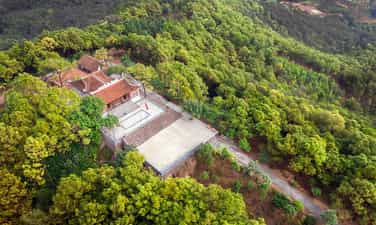
Danh mountain relic area
The story of Mount Danh (Lien Chung and Viet Lap communes, Tan Yen district, Bac Giang province) with the product of King-Southern ginseng passed down among the people for many generations inspired me to find this relic. From Bac Giang City, there are many roads to reach Mount Danh, but I chose to follow Highway 17 and then turn onto the Viet Lap-Lien Chung commune road. It's winter so both sides of the road are green with corn, sweet potatoes and many other vegetables. Going about 5km from the turn, the Danh Mountain Cultural and Historical Relic Area appeared before my eyes. Mount Danh is located not far from the romantic Thuong River, has the highest peak about 117 m above sea level and is the second largest mountain range of Tan Yen district after Dot Mountain (Phuc Son commune). This place has a beautiful natural landscape with a pine forest about 50 years old. Many people who come to Mount Danh have the same comment as being in the pine forest of Da Lat City (Lam Dong). Mr. Hoang Tien Dung in Muong Than commune, Than Yen district (Lai Chau province) said: "I have known about Mount Dang through the Internet for a long time, but now I have the opportunity to visit. Indeed, the scenery here is very beautiful, the air is fresh, and sitting and listening to the pine trees is very romantic. If I have the opportunity, I will invite relatives and friends to come here to play." The road up to Mount Den is built with brick steps with a total of 345 gentle steps. Right at the foot of the mountain is the Elephant Noi well, about 2m deep, with a surrounding bank. Local people say the well water is always clear and never dries up. Located on Danh mountain is Danh temple, a cultural and religious project of the local people. The Temple complex consists of 3 temples: Trinh Temple (at the foot of the mountain), Thuong Temple (on the top of the mountain) and Ha Temple (midway up the mountain). Den Temple worships the gods Cao Son and Quy Minh. When they were alive, they were talented generals, but later became sacred deities, becoming saints and talismans, helping people eliminate disasters and disasters, and were worshiped by people for many generations. No one knows exactly when the Temple was built, but based on documents and relics such as stone pillars, ancient incense bowls, sacrificial offerings, and altars still kept in the temple..., this project Built during the Le Dynasty in the 18th century. Through many ups and downs of history, especially during the resistance war against the French, the temple was much destroyed and no longer intact as before. However, the people here have restored and renovated many times, the temple has become more spacious and beautiful but still retains many ancient and unique features. In particular, the current Denh temple was rebuilt by the local party committee, authorities and people in 2017 on a larger scale but still lies on the foundation of the ancient temple in a gong-shaped architectural style, including The 3-compartment hall is connected to the 2-compartment harem court by a strip of waterpipe. During the resistance war against the French colonialists who invaded our country, Danh temple and Danh mountain were the advance stations for our soldiers to ambush and protect the free zone. Also here, on April 13, 1950, two guerrilla soldiers, Nguyen Ba Giai and Nguyen Dinh Khai, heroically sacrificed their lives while on guard duty to guard the front lines. Coming to the Danh Mountain Relic Area, visitors will not only be able to admire the vast and majestic landscape but also hear stories passed down in folklore about the Southern King-Samseng products of the people here. In the past, the Dinh mountain area had the famous Bao Loc Son festival throughout the region. In the early 19th century, Bao Loc Son was a canton in Yen The district, Lang Giang prefecture, including 4 communes: Bao Loc Son, Trung Son, Tuong Son and Kim Trang. The annual Bao Loc Son Festival is held on January 16 and 17, centered at the Um Ngo communal house relic complex, Viet Lap commune. This festival is the festival of four communal houses, also known as four families, typical of the families: Than, Giap Nguyen and Dong... in 4 villages: Kim Trang, Khoat, Nguyen and Um Ngo. These 4 villages have 4 communal houses, worshiping 4 Thanh Hoang. After the villages of Nguyen, Kim Trang, Khoat hold festivals, the palanquin procession goes to Um Ngo communal house to hold the festival on January 16 and 17, and from there, the palanquin procession goes to Nghe Ca on top of Dinh mountain for the opening ceremony of the year. . Four village festivals come together to form the Bao Loc Son festival. The festival includes games such as tree swinging, cockfighting, wrestling, kite flying... Wishes for good weather and wind, and prosperity for the people. Bao Loc Son festival was first restored in 1996. In 2019, Viet Lap Commune People's Committee continued to organize the restoration of Bao Loc Son festival. SOURCE BAC GIANG DEPARTMENT OF CULTURE, SPORTS AND TOURISM CENTER FOR INFORMATION - TOURISM PROMOTION
Bac Ninh
2967 view
Rating : National monument
MY DIEN Pagoda
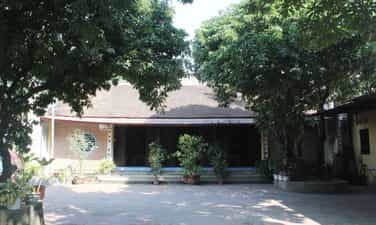
In My Dien neighborhood, Nenh town, Viet Yen district, an ancient pagoda called Thanh Minh pagoda is still preserved. Perhaps this is a unique ancient pagoda rarely seen in Bac Giang. The pagoda was built during the Ly Dynasty and has been repaired many times. The artifacts at the pagoda are proof that the ancient temple was built a long time ago. It is a green stone staircase created in the shape of a dragon in the style of the Ly Dynasty (11th - 12th centuries) placed in front of the pagoda door. The dragon has a head with a flaming crest, a nose and a mane that are very vividly structured with natural lines. The crest takes the entire upper lip and blends with the fangs in the shape of a flying cloud. The mane radiates from the nape of the neck towards the back. The dragon's beard is as soft as a wave moving forward. The dragon's nose is stacked curves creating the impression of a water source, the mouth is bared to reveal two rows of teeth holding pearls. The dragon's whiskers and crest point forward, creating an image resembling a Bodhi leaf. In a soft, natural posture like flying, the dragon has 11 segments, the segments are evenly spaced and winding, the dragon has 4 legs and 3 small claws. Many researchers believe that this is a dragon created on the doorstep of ancient My Dien Pagoda. Accordingly, there will be 2 stone dragons on the steps of the temple door, but unfortunately only one remains. Also according to cultural researchers, the dragon of the Ly Dynasty has a close relationship with Buddhism, it is associated with Buddhist images such as Buddha, lotus, lotus leaf... which is confirmed during the Ly Dynasty. , My Dien land was the place of development and prosperity of Dai Viet Buddhism. My Dien Pagoda is located behind the communal house according to the architectural structure of "before the Gods, then after the Buddha", the communal house in front of the pagoda after creating a complex of ancient continuous relics. After many renovations, the pagoda still retains construction items such as: Three entrance gates, 5-compartment Patriarch's house, 3-compartment guest house and Tam Bao temple. The temple grounds are filled with shady green trees. In the middle of the pagoda yard, there is still a stone stele of the Le Dynasty, the 8th year of Vinh Thinh (1713), recording the merits of creating the stone stele and casting the temple bell. Through the temple grounds to the Tam Bao building, this building has 5 front halls connecting 3 upper halls, creating a nail-style architectural plan. The architectural structure of the inner roofs is in the form of stacks of cones, gong stands, seated lines, and architectural structures carved with floral and leaf shapes that have artistic value. The upper palace is fully decorated with a system of Buddha statues. Statues in the style of the Le and Nguyen dynasties have historical and artistic value. In addition to the above valuable artifacts, My Dien Pagoda also preserves many documents and artifacts that are valuable for researching typical cultural and artistic history such as incense bowls, stone stele, horizontal system, parallel sentences... This is There are scientific grounds to confirm that under the Ly Dynasty, My Dien Pagoda was a Buddhist center with a large scale, quite complete and dignified architecture. My Dien Pagoda is the center of cultural and religious activities, where traditional festivals of the people have been held from past to present. The village's festival takes place on the 1st day of the second lunar month with many rituals and folk games imbued with national cultural identity to thank God and Buddha for a prosperous and happy life. With unique historical and cultural value, My Dien Pagoda was ranked as a provincial cultural and historical relic in 2004. Although it is a bustling industrial development place, My Dien today still preserves many cultural heritages of the nation. Religious and belief works such as My Dien Communal House, Nghe An, Ngo Dat Dung District's mausoleum, Nguyen Doc Thuc's mausoleum, King Ba temple... have a lot of potential to develop the local tourism economy. In particular, Thanh Minh Pagoda in the heart of the neighborhood has been an attractive address for tourists to worship Buddha. SOURCE: BAC GIANG DEPARTMENT OF CULTURE, SPORTS AND TOURISM CENTER FOR INFORMATION - TOURISM PROMOTION
Bac Ninh
2832 view
Rating : National monument